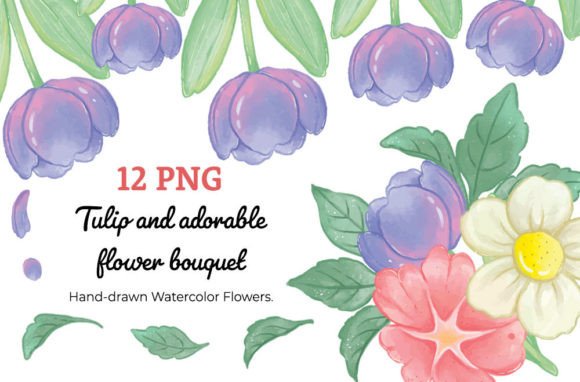
Watercolor Tulip Flowers ClipArt & Illustrations
I recently opened a new file for a client rebranding a small, handmade floral shop. The brief was specific: they needed something that felt organic, soft, and undeniably spring-like without losing the professional polish required for their upcoming product line. That is when I stumbled upon the Watercolor Tulip Flowers ClipArt. As a designer who has sifted through countless assets on the creative marketplace, my first instinct is always to test if an illustration holds up under real-world scrutiny. Does it look good in a thumbnail? Will it print cleanly? Can it anchor a brand identity?
The first impression of this asset set is immediately warm and inviting. The visual elements capture the fluidity of watercolor paint, with soft edges and gentle gradients that mimic the natural imperfection of hand-painted art. This mood creates an instant emotional connection, suggesting freshness, growth, and delicate beauty. It is not the rigid, geometric style often found in modern corporate design; instead, it leans into a romantic, artisanal aesthetic that fits perfectly with handmade businesses, boutique product lines, and seasonal campaigns.
Testing the Asset in Real Client Scenarios
To determine if these Illustrations were viable for my client's project, I began placing them into various mockups. For a packaging design, specifically a label for a jar of dried flowers, the tulips provided a beautiful decorative accent. They didn't overpower the typography but added just enough texture to elevate the package from generic to premium. When I moved the same asset to a social media graphic for Instagram, the vibrant yet soft hues popped against a clean white background, creating a strong visual hierarchy that drew the eye immediately to the call-to-action.
This versatility is rare. Many clipart sets feel flat or pixelated when scaled up, but the Watercolor Tulip Flowers ClipArt maintained its integrity. I tested it as a hero graphic for a website landing page, using a large layout area to showcase the blooms. The result was a polished, editorial design feel that suggested high-quality craftsmanship. I also experimented with the asset for a t-shirt design, placing a single, large tulip on the chest. The transparency worked well, allowing the fabric color to show through the negative space, which is crucial for print-on-demand sellers looking for sublimation designs that don't look like cheap transfers.
Where This Design Asset Shines
In my experience, certain graphic design assets have a "sweet spot" where they perform best. These tulip illustrations excel in projects that require a touch of whimsy and warmth. They are ideal for:
- Printable wall art: The soft textures translate beautifully to paper, making them perfect for nursery decor or home office prints.
- Invitations and stationery: Whether for a wedding, baby shower, or local event, the floral theme adds a layer of elegance without being overly formal.
- Sticker design: The distinct outlines and vibrant colors make these assets cut-friendly for Cricut projects and vinyl cutting machines.
- Etsy products: Digital sellers can use these to create bundles of digital planners, journals, or scrapbooking elements.
- Brand identity: For a florist or garden center, these images can serve as supporting brand elements that reinforce the nature-focused mission.
When used in a design bundle or as part of a larger marketing visuals campaign, these illustrations help create a cohesive story. They work exceptionally well when paired with serif fonts or handwritten font styles, enhancing the vintage or rustic vibe. Even in web design, where load times matter, the PNG files are optimized enough to maintain quality without slowing down the site.
Cautions for Professional Application
However, not every design situation calls for a watercolor flower. As a professional, I must advise caution when using these assets in contexts that demand strict minimalism or high-contrast technical precision. If you are designing for a law firm, a tech startup, or any corporate material requiring a very clean visual hierarchy, these organic shapes might feel out of place. The soft edges can sometimes blur in crowded layouts, reducing readability if text is placed directly over the petals.
I also recommend avoiding small sizes. While the asset looks great as a large focal point, shrinking it down to a tiny icon size can cause the delicate details to disappear. Similarly, placing these light-colored flowers on a dark, complex background requires careful contrast checking. Without sufficient separation, the image can get lost, diminishing the overall impact of your design project. Always preview the asset at the intended final size before committing to a commercial license purchase.
Practical Designer Notes for Commercial Use
Before integrating any clipart into a client project, I follow a strict checklist. First, I test the Watercolor Tulip Flowers ClipArt in black and white. Does the value structure hold up? If the design relies too heavily on color, it may fail in grayscale printing scenarios. Next, I check the file formats. Are there SVG options available for vector editability? Having an SVG design allows for infinite scaling and color adjustments, which is essential for custom branding. If only PNG files are included, I inspect the transparency to ensure there are no jagged edges or unwanted halos around the flowers.
Typography pairing is another critical step. I compared the tulips against sans serif fonts for a modern twist and script fonts for a traditional look. The combination with a display font created a striking poster design, while a simple sans serif kept the focus on the illustration itself. Finally, and most importantly, I confirmed the commercial licensing. Using a digital product for a client project, especially for merchandise like tote bags or mugs, requires explicit permission. Never assume a free download includes a commercial license. Ensuring you have the rights protects both you and your client from legal issues down the line.
Ultimately, the decision to use these Illustrations comes down to the brand voice. For my floral shop client, the Watercolor Tulip Flowers ClipArt was the missing piece. It brought the visual mood they wanted to life, improved the emotional appeal of their packaging, and helped the final result feel more polished and trustworthy. For designers, marketers, and small business owners, having access to high-quality design assets like this can be the difference between a generic template and a memorable brand identity. Whether you are creating a Canva template, a sticker sheet, or a full marketing campaign, understanding how to leverage these tools effectively is what separates amateur work from professional design.